Branding14 Aug 2023
The importance of brand design


Recognition is what design buys you, and its absence is expensive: a buyer who cannot pick your brand out at a glance, or cannot recall who you were a week later. Belong Creative approaches brand design for mid-sized businesses and larger by starting with research into customers, employees and competitors before a single visual decision is made.
In short
The importance of brand design is that it shapes the first and lasting impression of your business. Strong design makes you recognisable, signals quality and builds trust before a word is read. For buyers comparing options, it is often the difference that tips a decision.
Key takeaways
- Brand design is a system, not just a logo. Elements such as logo, colour palette, typography and photography style work together everywhere the brand appears.
- Colour can influence up to 75% of purchasing decisions, which is why palettes are set against audience research rather than personal taste.
- Belong Creative builds brand identity in four steps: a) research customers, employees and competitors, b) craft a Value Proposition, c) develop three design concepts, test and refine, d) then produce a Brand Style Guide.
- The benefits compound over time: recognition, recall, faster trust, higher business value, and stronger loyalty among both customers and employees.
- Consistency is what makes any of it pay off, and a style guide is how the identity survives more people, more suppliers and more channels using it.
What is brand identity design?
Brand identity design refers to the development of core visual elements that combine together to create what is known in the mind of your target consumers as ‘your brand’. The output is a key part of any corporate strategy to help differentiate, attract and retain the right customers for any business.
Many of the world's most famous brands have a brand identity design that creates a striking visual image that stands apart from competitors and helps generate brand equity and awareness over time.
Why does branding matter?
Branding creates a unique and memorable image of a business’s service or product in the mind of its customers or prospective customers. It has the power to persuade, influence and shift perceptions and even ignite action and behavioural changes.
Brand strategy helps guide the consumer in the decision-making process (even if they don’t know it!), creating trust and value through personality, education, relatability and especially connection through alignment of perceived values. For example; Coca-cola creates an identity around magical moments. So uses design elements that are fun and spontaneous; bubbles, ice chinking, red and white waves and more recently personalisation (i.e. your name printed on a bottle) to surprise and delight you.
The enhanced equity resulting from meticulous, strategic-led branding significantly amplifies the brand's recall potential in the minds of consumers. So next time they see the brand it brings feelings and values to life through association.
Elements of brand design
Brand design consists of various elements, which include:

The logo is the first thing you notice of any brand in its marketing collateral, packaging or across digital media. The logo sums up the brand identity and increases brand recall through its symbolic nature. However a brand is much, much more than the logo itself.
The logo also improves customers' trust once they become familiar with your brand. Over time, this trust creates brand loyalty among your audience.
Brands must build and design their logo with utmost care and consideration. Brand design agencies such as Belong Creative also help in creating logo designs.

A brand’s colour palette is a specific set of colours that brings your brand personality to life. The colour palettes are reflected in all key touchpoints such as; the logo, website, marketing collateral, social media posts etc. Colours enhance the expression of your brand and what tone, values and personality the brand communicates with its intended audience.
For example: Think blue and what brands come to mind? Brands like; Ford, Walmart, IBM, Amex, PayPal. Blue is often a colour associated with trust and dependability.
Or what about red? Think of McDonalds, Coca-Cola, Kmart, Netflix, Avis. Red is a dynamic attraction colour and suggests energy, action or a challenger attitude.
Some brands are iconic because of their strong use of a relatable colour. Tiffany Blue and Cadbury purple are prime examples.
You should carefully consider brand colour selection as all brand associations are highly dependent on it. Colour can influence up to 75% of purchasing decisions.*

Typography is a visual design component which brings your organisation's personality to life with written copy content. A font is chosen, or in some instances created from scratch that supports the tonality and values of a brand’s messaging and style. Choosing the right font helps your brand communicate the intended message, with clearer tonality. For example; if your business was in bridal wear you would choose an elegant scripted font versus if your business was in mining, where a bold, sans serif font may be more suitable to convey strength, simplicity and resourcefulness.

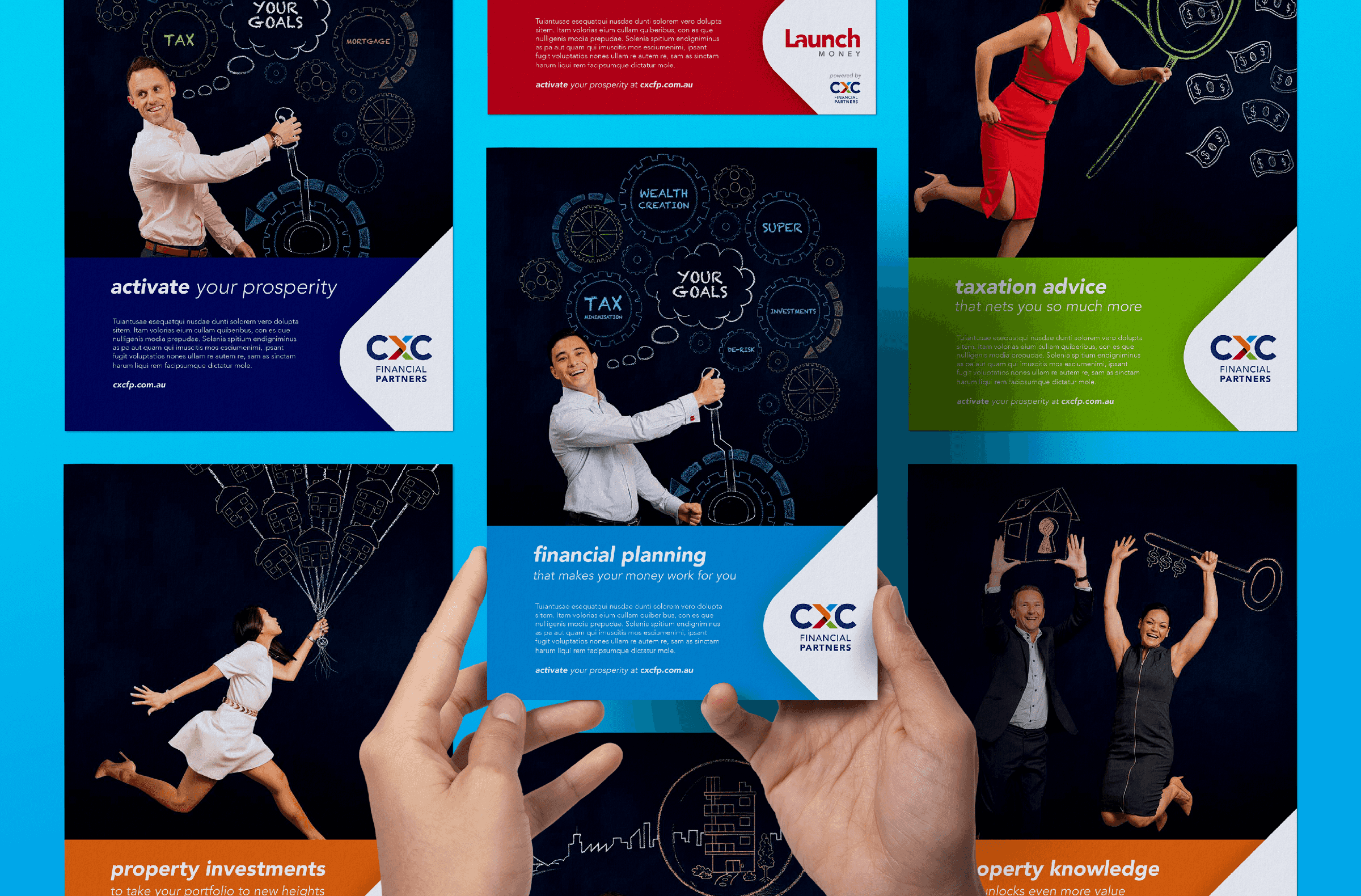
Photography plays a vital role in brand design and branding campaigns. A defined photography style helps guide a way of using images that directly supports brand personality and positioning. Your style can steer aspects of photography such as content subject matter, composition, colouring, layering, approach to using talent. Some brands fall into the trap of using stock imagery available on-line which any brand can own and therefore lacks differentiation. The key is to make your imagery ‘ownable’. A good test is to hide a logo on an advertisement - can you tell who the brand is just from the photography? Luis Vuitton would be an example of how brands can create ‘ownable’ photography style for their brand.
While using images online and offline, using a cohesive photography style with consistency and consideration will be a powerful asset in your brand kit.
How to build your brand identity design
To create a successful brand identity design, it’s essential to consider the following strategic steps:
1. Research customers, employees and competitors
The first step in building your brand identity design is knowing your audience, competitors and employees. It becomes easier to design the visual brand elements with an idea of what key stakeholders want, need and expect from your brand. Do your research and ask - ‘what do you value most about our product or service and why? How does it make you feel when you use or product and service and why? Why did you choose our product or service over competitors?’ The answers to these questions will help create a more relatable brand identity.
2. Craft a Customer Value Proposition
Knowing what benefits customers will value becomes vital in creating brand identity. The CVP is drafted when we see what customers desire and value from our brand in comparison to competitors, through market research. Your value proposition is a set of strategic messages that are authentic, relatable and differentiating. It will inspire your brand personality delivered through brand identity design elements such as colours, fonts and other design elements. For example, if your product (let’s say face cream), makes your customers feel invigorated and fresh, you might go for bright blue or green colours and energetic typography and imagery. Or perhaps your product makes them feel calm and one-of-a-kind, you may choose to bring pinks, or metallics into your brand identity along with a traditional serif, or unique hand-scripted fonts.
3. Develop brand design concepts
Brand design concepts represent the basic ideas behind generating the visual branding or brand identity design elements such as logo, colour, typography, icons, illustrations etc. The brand design concepts give a blueprint for the various brand design elements representing the brand. We would recommend exploring 3 creative design concepts which is ideal for exploring different ways to bring your value proposition to life and give businesses a choice of direction.
4. Test and refine concepts
Testing and refining design concepts ensures your brand aligns with business vision, mission and values. This can be done via research with senior business leaders, employees and customers to get a broader perspective. Equally, as attitudes of customers changes, new competition emerges and economic scenarios shift, there is always value in validating and potentially refining your brand to avoid stagnation.
5. Develop Brand Style Guide
Finally, after going through the process, it becomes essential for businesses to develop a brand style guide. The brand style guide defines how to use all the elements of brand identity design accurately and effectively, in order to build a coherent brand in the marketplace. It ensures all stakeholders that either manage or deliver your brand, both internally and externally, are working from the exact same specifications.
Benefits of brand design for your business
Organisations, big and small, are investing in brand design to ensure their products and services become well known amongst their ideal target audiences. Customers have more choice than ever before. To avoid confusion and brand ‘blandness’ and truly differentiate your business, brand design is a powerful tool, offering the following advantages:

Brands with distinct and unique brand design have a chance of higher recognition than those resembling competitors. World-famous brands such as Apple, McDonalds and IKEA use different logos, colours and integrated brand design elements. This helps these brands create unmatched brand recognition. Brand design is the process of ensuring your brand is authentic but also distinctive in your competitor market.

Differentiation and improved recognition lead customers to purchase more repeatedly. Distinctive brand design elements make it easier for customers to know and trust the brand. They come without questioning the product or service itself, since the design elements combine to make it recognisable again and again. For example Coca-Cola has immense brand equity. If you take away all the physical assets like buildings, factories and product materials, the vast majority of the company’s worth is in its brand elements; name, logo, design of bottle, colours, fonts etc that make Coca-Cola, well, Coca-Cola!

Brand design elements carefully crafted can increase brand awareness and association (i.e. what you stand for) with more of the ideal customer. Even after attracting new customers, with a defined brand design, your brand plays a role in engaging, retaining and even building loyal advocates (the ultimate goal!). Customer losses decrease when there is a strong and loyal connection between a brand and its consumer.

Cohesive brand design elements across all your brand collateral and touchpoints help customers more easily recognise and recall your brand. With each use of your product and service, feelings and values are embedded into the customer’s perception of your brand and recall these emotive connections when they see your brand again.

When the same brand design elements are present across all brand marketing platforms, consumers perceive it as a trusted source. It suggests that this product or service has been created with care and consistency, helping customers feel it is a reliable choice. Over time, this brand equity helps customers make purchasing decisions even more quickly and easily.

Uniform brand design elements can also improve employee unity. You want your employees to not only have trust and confidence in the brand they work in and represent - but pride as well. This can instil motivation and purpose and impact on morale and even boost productivity.

Loyalty becomes more organically acquired when brands connect with their audiences leveraging cohesive brand design elements. Customers and employees praise the brand as trustworthy when they observe the uniformity with which the brand design is delivered and encourages sharing. Indeed employees can be one of the most powerful advocates of your brand identity sharing an authentic insider’s view that carries a lot of credibility to external customers and candidates looking to join the organisation.

Brand personality refers to giving a human character to the brand. When brands act more human-like, they are easier to relate to. Brand personality is the result of the brand design elements and other non-design elements combining that help customers make inferences about what the brand stands for and how it behaves.
Belong Creative has helped many businesses design a strategic-led, brand identity to support market positioning, customer acquisition and employee unification.
Frequently asked questions
What is the primary purpose of brand design?
Brand design makes a brand recognisable and memorable amongst its ideal audiences. It improves the value and identity of the brand and supports business and marketing goals, so the work should be judged on what it achieves commercially, not on whether people like the look of it.
What is included in brand design?
At minimum a logo, a defined colour palette, typography and a photography style, all documented in a brand style guide so every team and supplier applies them the same way. These elements only work as a set. If used inconsistently, they stop building recognition.
How do you tell high-quality brand design from the rest?
Quality brand design is relatable, authentic and differentiated. It helps customers make purchasing decisions more quickly because the values of the business are clear from the design itself, and it holds up across every place the brand appears, not just in the logo presentation.
How does brand design affect buyer trust?
Buyers form a view before they read anything. Considered, consistent design signals that a business is established and careful with detail, which shortens the time it takes to be trusted. That matters most when someone is comparing several similar suppliers.
Explore our brand design, the 8 essential brand assets, brand personality and the CXC project.