Branding30 Jan 2026Andrea Boyle

Designing brand systems for the future

Brands are being asked to do more than ever. Brands have always been about more than how things look. They shape how people feel, how teams align, and how organisations show up in the world.

But lately, I’ve been thinking about how much harder that’s becoming. Work moves fast. Teams are distributed. Content is constant. And brand can’t just live in a deck or a set of guidelines that people check once and forget. It has to live in the everyday, in the small choices people make without even realising they’re making them. The way we write, the way we speak, the way we build things, the way we show up.

Brands need to live in the everyday, not just in guidelines.

That’s what’s been pulling me toward the idea of brands as living systems. Almost like an operating system. Something underneath it all that quietly guides decisions and behaviours, so brands feel coherent not because everyone is trying really hard, but because the system makes it easier.

I’ve been exploring what it means to become a Brand Systems Designer, and honestly, what excites me most is that this kind of work isn’t about creating more rules. It’s about creating more support.

Because in reality, most people aren’t thinking about brand guidelines while they’re writing a caption, pulling together a deck, replying to a client, or making a decision under pressure. They’re just trying to do good work, quickly, with whatever tools they have in front of them.

A living brand system helps in those moments. It gives people something to lean on. It makes the brand feel present without feeling heavy. And it helps coherency happen naturally, not through enforcement, but through ease.

So what does it actually look like to design a brand system?

It’s not just about templates or documentation. It’s not about building a library and hoping people use it. It’s about designing the conditions that help people make brand-aligned decisions without needing to stop and second-guess themselves every time.

It might be the way tone of voice becomes easier to write in because the patterns are clear. It might be the way visual coherency holds across dozens of touchpoints because the building blocks are thoughtfully designed. Or it might be the way teams feel more confident creating work because the brand isn’t something separate from them, but something they can actually access and trust.

A Brand Systems Designer is thinking about all the everyday moments where the brand shows up. How a new team member learns the language. How a campaign scales without losing its shape. How decisions get made when things are moving fast.

And when the system is working well, the work becomes almost invisible. Everything just feels smoother, clearer, and more connected.

That’s where Living Brand starts to feel really meaningful. Not as a finished thing, but as something we’re building toward. A shared foundation that helps the brand stay clear and usable, even as everything around it keeps changing.

Designing systems in a changing tool landscape

This feels especially important right now, because the tools we use to create are changing too.

AI is already part of so many workflows. People are using it to generate ideas, draft copy, build content, explore layouts, and move faster. But without a strong brand system underneath, that speed can create inconsistency very quickly. The work might look polished, but it might not feel like them.

That’s why one of the biggest opportunities within a brand system is designing tools that help guide AI outputs in a way that stays true to the brand. This could be shared prompt frameworks, tone-of-voice patterns, or principles built directly into how content is created. Not to limit creativity, but to make sure what’s produced, even with the help of AI, still carries the same intent, personality, and coherency.

AI can move fast, but brand systems help it stay true.

What this shift asks of clients

Designing brand systems doesn’t happen in isolation. It works best when it’s treated as a shared effort, shaped through collaboration rather than handed over as a finished solution.

For clients, supporting this shift doesn’t mean having all the answers. It often starts with a few simple, but important, ways of showing up.

It asks for an open mind. Brand systems can look and feel different to traditional brand projects. They’re less about a single moment of delivery and more about building something that can evolve over time.

It also asks for flexibility. Systems are designed to adapt, not to lock things in forever. Being open to iteration, learning, and refinement helps the brand stay relevant as the organisation and its context change.

Clarity matters too. When clients are clear on what’s most important, the values, principles, and decisions that should never be compromised, it becomes much easier to design systems that hold those things steady while everything else moves.

And finally, it relies on collaboration. Brand systems are strongest when they’re built with the people who will use them. Working closely with brand designers to shape the system, test it in real situations, and evolve it over time helps ensure it’s not just well designed, but genuinely useful.

At its core, this work isn’t about replacing creativity. It’s about creating the infrastructure that allows it to flourish.

“While many AI platforms are racing to replace human creativity with automation, the ones that will triumph will be those that create the systems to unleash and amplify it.”

Andrea Boyle – Senior Creative, Belong Creative

That idea captures the intent behind Brand Systems Design. Building structures that support people, so creativity can move faster, further, and with more confidence.

The future is more fluid

Looking ahead, this is why brand systems feel like such an important space for the future.

Brands are being asked to move faster, show up across more places, and stay coherent through constant change. But the answer isn’t more guidelines or more control. It’s better systems. Systems that help people create with confidence, make decisions with clarity, and feel connected to something shared.

A Living Brand is really about people. About making it easier for teams to create, communicate, and move with clarity. It’s something we continue to build together over time, shaped through everyday use and shared understanding.

And it’s still evolving, just as the thinking behind brand systems is still evolving too. That’s what makes it such an exciting space to grow into. Creating the tools, patterns, and foundations that help brands feel clearer, more usable, more authentic, and more human as we move forward.

Article by Andrea Boyle

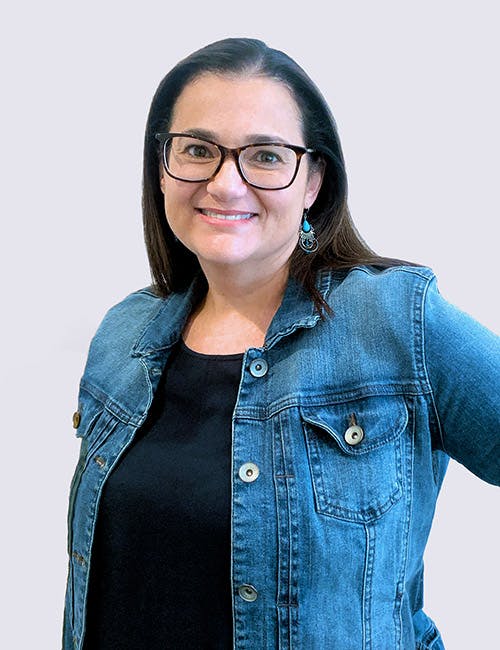
Andrea Boyle is the Senior Creative Designer at Belong Creative. She seeks to solve problems with visual solutions that captivate and inspire people with beautiful design. When not working she enjoys getting outdoors, reading a good book and spending time with her family.